01
Before
A paper appointment register, one per chair, kept at the front desk.
After
A single day board every chair and doctor sees, with conflict detection and status transitions from arrived → in-chair → completed.
 SmileDesk
Ran SmileDesk for a year before we productised it. Here's what the numbers look like.
Illustrative numbers rounded from the clinic's own dashboard — real figures will be substituted before this page is shared externally.
“It stopped being the receptionist's memory that decided which patient got a reminder. The system does that now. We ran a real week on it before we trusted it, and then we never went back to paper.”
A paper appointment register, one per chair, kept at the front desk.
A single day board every chair and doctor sees, with conflict detection and status transitions from arrived → in-chair → completed.
Reminder calls the day before, made when the receptionist remembered — and often forgotten on a busy Saturday.
Automatic WhatsApp confirmations on booking, plus a 24h-before reminder that cancels itself if the appointment is cancelled. No one has to remember.
Insurance claims tracked on a shared Excel that never quite matched the receipt book. Nobody could answer "how much is pending with insurers?" without an hour of reconciliation.
Insurance-tracked receivables. A pending claim stays visible in Outstanding until the insurer pays. The chase queue is a page — not a memory game.
Receipts on carbon paper, one for the patient, one in a folder that lived on Dr. Archana's desk.
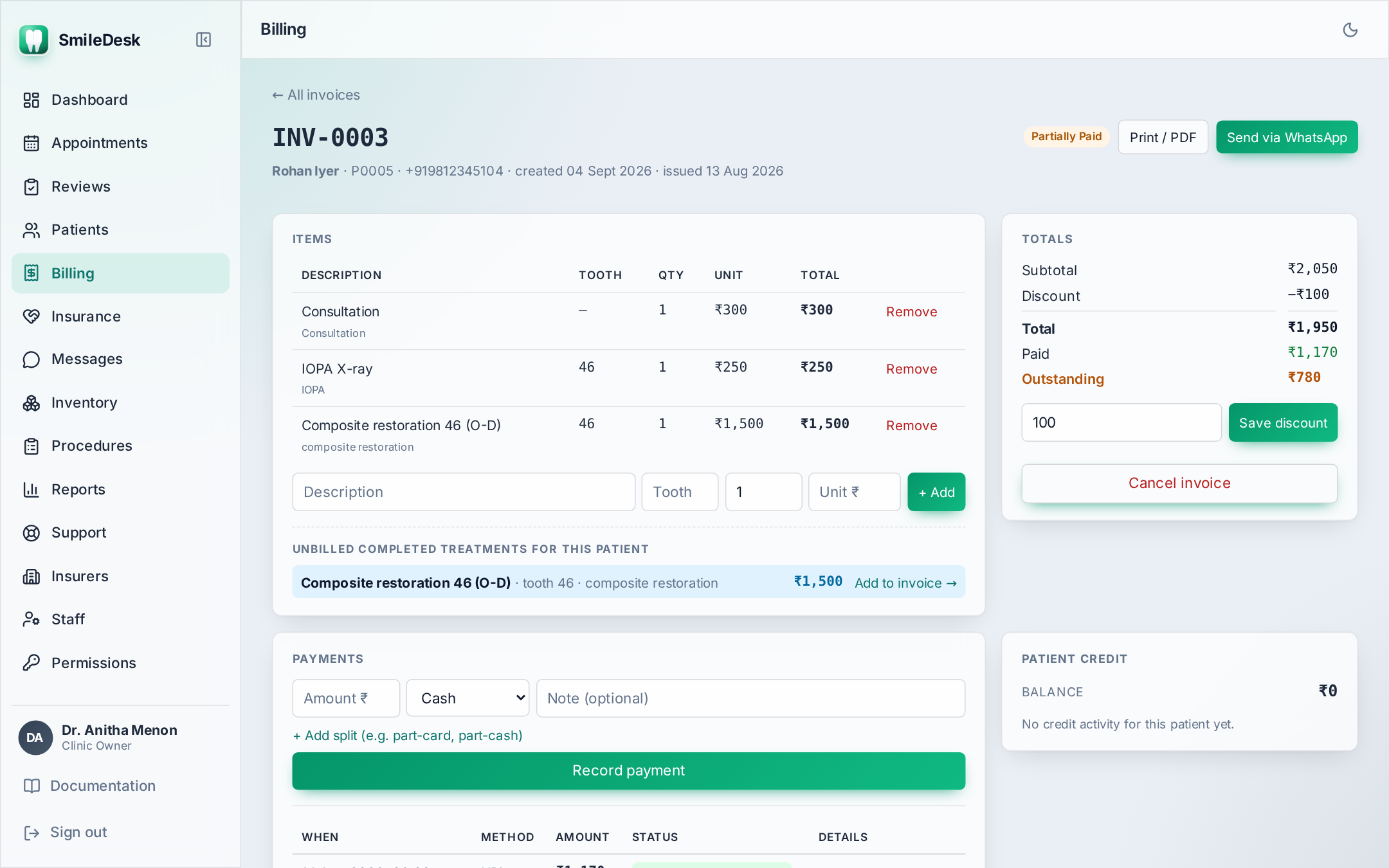
A digital invoice with a WhatsApp receipt landing in the patient's phone before they leave the chair. Search finds any past receipt in one tap.
Set up SmileDesk in the morning, book a real day on it, watch the WhatsApp reminders go out. Decide after that.
Start free trial